
Emporia Previous Residents Sources
No single roll identifies every person who occupied an Emporia house. The current parcel record is the starting point, while deeds document changes in legal title. City directories and census schedules add household names. Sanborn maps test whether the building and street label existed in a given year, but they do not name an occupant. Newspapers, permits, and probate records can fill the spaces between those dated sources.
| Source | Years It Covers | Where Held | What It Shows |
|---|---|---|---|
| Parcel and Beacon route | Current database; online cutoff not published | Lyon County Appraiser | Current parcel, owner, address, and values if shown |
| Deed index and books | Historic records; online cutoff not published | Register of Deeds and Fidlar services | Grantors, grantees, transfers, plats, and liens |
| Emporia directories | 1883, 1887-88, 1890-91, and intermittent 1902/03-1960 runs | KSHS, EPL, interlibrary loan | Names, addresses, work, and household context |
| Federal census | Released schedules through 1950 | NARA and genealogy access | Household members and census-date context |
| Sanborn maps | Emporia sheets from 1884 through 1962 | KSHS and KU | Building footprint, use, materials, and street labels |
| Newspapers and Gazette | Selected papers from 1857; local microfilm 1978-2015 | KSHS, EPL, and Library of Congress | Obituaries, legal notices, sales, and social news |
Start with the source closest to the target date. For a recent change, use the parcel and deed path. For a mid-century household, compare a directory with a released census. For an early building, use the deed's legal description with plats, maps, and newspaper notices. Gaps are normal, so a blank index result is a prompt to change channels, not proof that no one lived there.
Emporia Records Start With Parcels
The Lyon County Appraiser directs the public to Beacon for parcel research. During the research capture, Beacon was blocked, so its exact live fields and historical depth could not be verified. Ask the Appraiser for the parcel ID, current owner, situs address, mailing address, and legal description when the web route fails. A situs address is the physical site. The owner's mailing address may be elsewhere.
Copy the addition, block, lot, or section description exactly. That text is a stronger link across old records than a street address. Emporia's piecemeal annexation and subdivision growth can produce city, county, and postal differences. No verified citywide renumbering date was found, so do not invent one. Test direction and suffix variants, compare nearby cross streets, and ask city GIS staff about old address-point records.
Walk Emporia Resident Deeds Backward
The Lyon County Register of Deeds search page sends researchers to Fidlar's Laredo and Tapestry services. The county does not publish the online start date or full field list. That makes the courthouse books, office index, phone, fax, and copy request essential parts of an Emporia previous residents search.
- Record the current parcel ID, owner, and full legal description from the Appraiser or GIS.
- Find the current owner's purchase deed as grantee. Copy its date, instrument, book and page, legal description, and prior grantor.
- Search that prior grantor as a grantee. Match the same land before accepting the hit.
- Repeat one transfer at a time. Note name variants, releases, mortgages, plats, and probate links without mistaking them for sales.
- When the vendor index ends, call the Register of Deeds at 620-341-3242 and ask for the office index, deed books, microfilm, or a certified copy.
- Grantor
- The person or entity transferring an interest in land.
- Grantee
- The person or entity receiving that interest.
- Chain of title
- The linked series of recorded transfers for the same parcel.
- Legal description
- The formal land identifier based on a lot, block, addition, or survey, not merely a postal address.
Emporia Records Gain Sanborn Dates
The Kansas Historical Society's Emporia Sanborn list documents map dates in 1884, 1888, 1893, 1899, 1905, 1911, 1923, 1929, 1929-46, and 1962. The sheets can show a building footprint, use, construction details, nearby structures, and the street name used at that time.
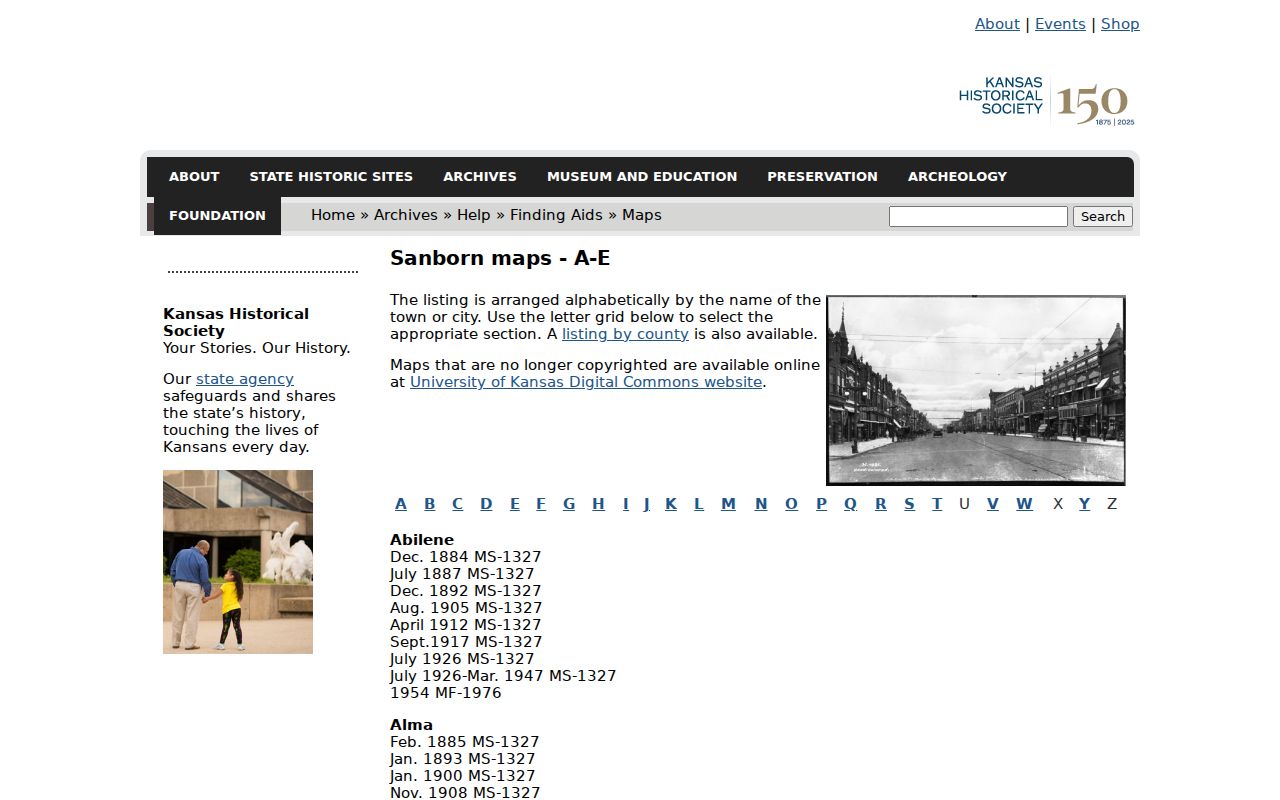
The dated holdings make Sanborn maps a strong check on address continuity. They cannot identify previous residents. Pair a map sheet with a directory, census entry, or dated deed before attaching a person's name to the structure.
Emporia Archives Extend Resident Trails
The ESU Special Collections and Archives is open to public researchers in a closed-stack reading room. Staff accept research questions by mail, phone, or email. Visitors register, use pencils, and follow copying, privacy, donor, and copyright limits. The Walter M. Andersen Collection includes Emporia city directories among photographs, scrapbooks, and regional materials.

This archive can add photographs and local context after a name and date are known. It is not a public address index, and staff restrictions may control access to personal papers.
The Lyon County History Center also keeps a research library available by appointment. Ask for house photographs, subject files, historic plats, tax references, and building notes. No full address index or published research fee schedule was found. A narrow request with an address, addition name, and time range gives staff more to work with.
Emporia Newspapers Name Past Residents
The Emporia Public Library's home research resources connect cardholders with newspaper and history tools. EPL also has microfilm workstations and a Book-a-Librarian route. The verified local newspaper span includes early Emporia papers through KSHS and the Library of Congress, Gazette microfilm for 1978-2015, and Gazette access from 2002 forward.

Search an exact address, the legal description, the owner name, and nearby cross streets. Sale notices may bridge deeds. Obituaries can identify relatives or a later home. Probate notices may connect an estate to a transfer, but each item is dated evidence, not proof of a continuous stay.
Emporia Records in County Context
The KSHS Lyon County history and genealogy page places Emporia in a county established in 1862, five years after the town's founding. The first verified local directory is the 1883 J. W. Truitt volume. Earlier title and occupancy work therefore leans more on deeds, census schedules, newspapers, maps, and archive files.
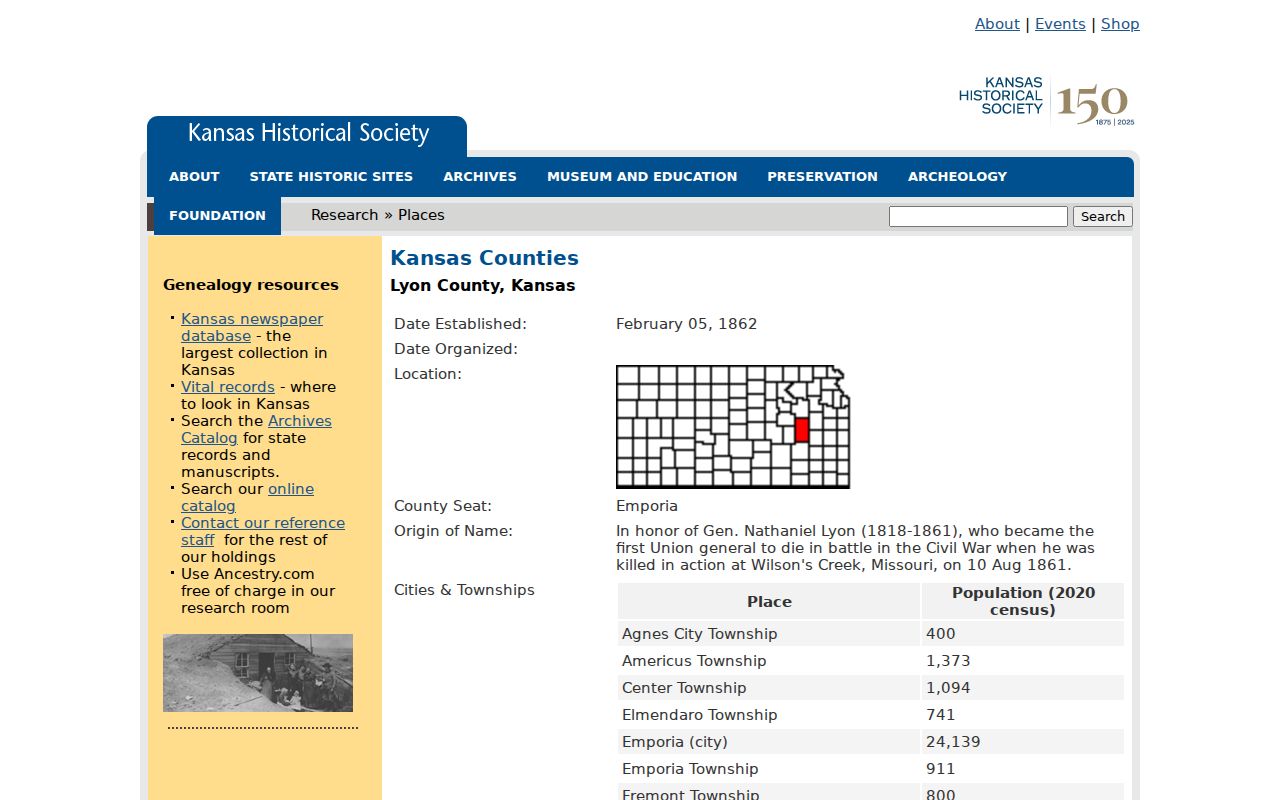
The county page supplies historical and genealogy leads, not a complete chain for one property. No official source in the research set established a courthouse fire or a broad loss of deed books. Treat any such story as unverified unless a county or KSHS finding aid confirms it.
Downtown Emporia Address Layers
Downtown offers a useful test case because several records meet near 6th and Commercial. Kansas Historical Society material identifies that crossing as the original city center. The Emporia Original Townsite plat can translate a modern parcel into its lot and block. Sanborn sheets then show whether a structure stood on that site near one of the mapped years, while city directories and newspapers attach dated names and uses. The downtown historic district covers about 18 blocks and includes 169 buildings, so a building history may also appear in survey or nomination material.
Keep the evidence types separate. A Sanborn label describes a building or land use, not necessarily the people inside. A directory entry reflects the publisher's survey near that edition year. A deed proves a recorded interest, not continuous occupancy. Historic photographs may carry a later caption or a view taken from another corner. When all four sources use the same lot, street form, and time range, they create a sound lead for previous residents. When they disagree, search the legal description and the names of the original townsite or later addition before deciding the address changed.
City Planning and GIS can help reconcile a modern address point with an older plat. For the record itself, return to the Register of Deeds, archive, or library that holds the original. That custodian can explain whether a scan is complete or only an index entry.
Pair Emporia Directories and Census
Owners are only part of the history. Emporia directories can place a listed householder at an address during the volume's compilation period, while released federal census schedules can show a full household on census day. The verified local directory spine includes 1883, 1887-88, 1890-91, and intermittent years from 1902/03 through 1960. KSHS says many Kansas directories through 1963 have been digitized, but a complete Emporia run was not verified.
- Choose a directory year near the target date and search by name. Use a reverse section only if that edition contains one.
- Copy the printed address, work entry, spouse notation, and abbreviations. Check the volume key.
- Compare the closest released census, allowing for street labels, wards, moves, and compilation lag.
- Test the names in newspapers and probate. Then compare the result with the deed timeline.
A criss-cross directory organizes entries by street and number rather than only by surname. An enumeration district is the geographic area assigned to a census taker. Neither turns a missing entry into proof of vacancy. The collection details belong on the Emporia city directory page.
Lawful use. Research previous residents for house history, genealogy, or estate work. Never use an address trail to watch, threaten, or harass a living person.