
Emporia City Directory Holdings
The Kansas Historical Society directory guide is the sound first catalog. It describes state holdings that begin with broad directory material in 1859 and continue to modern times. For Emporia, several early books are verified by title and publisher. Later microfilm runs are catalog leads that should be confirmed before one assumes a year is present.
| Collection | Years | Where Held | Access |
|---|---|---|---|
| General City Directory of Emporia | 1883 | KSHS catalog and collection | Confirm scan, reel, or research-room copy |
| Emporia City Directory | 1887–88 | KSHS | Research-room or catalog request; digital status unverified |
| Emporia City Directory | 1890–91 | KSHS | Research-room or catalog request |
| Emporia directories | Intermittent 1902/03–1934 | Microfilm catalog lead, KSHS, or ILL | Verify title, reel, and missing year |
| Polk's Emporia, including Lyon County | 1938–39 | KSHS collection record | Confirm the page and section used |
| Lyon County and Emporia directories | Intermittent 1936–60 | Microfilm catalog lead | Reels 32–34; confirm exact edition |
| Kansas digitized directory partnership | Many Kansas runs through 1963 | KSHS-linked Ancestry access | Kansas resident login or research room; Emporia years vary |
Known missing years appear across the reported microfilm runs, and the last printed Emporia year was not verified. KSHS also cautions that less than five percent of older holdings appear in its newer ATLAS catalog. A blank online search is therefore not proof that no book survives.
The KSHS holdings screen below shows the directory search route and its format choices.
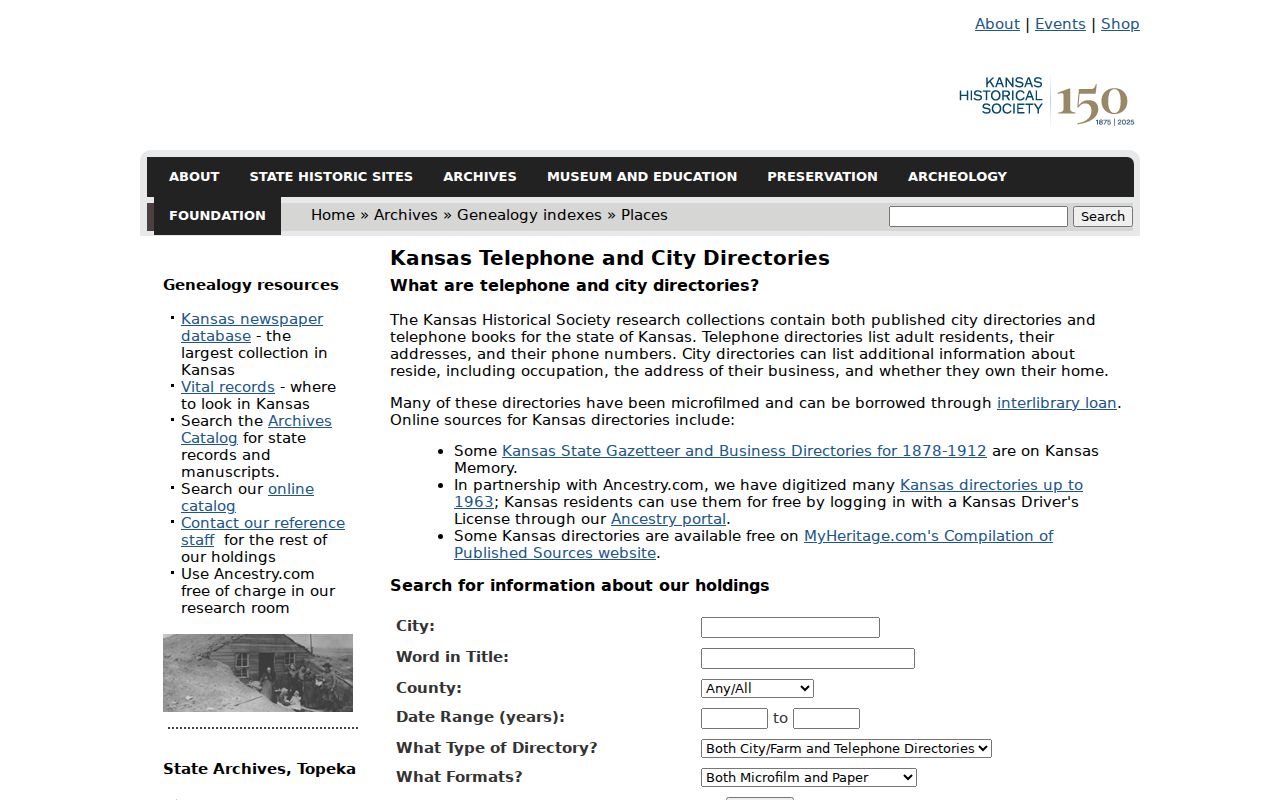
Search City, Word in Title, County, year range, directory type, and format, then ask staff about finding aids that remain in the research room.
Emporia Directory Years Verified
J. W. Truitt's General City Directory of Emporia, Kansas was published by G. H. Rowland and Company in 1883. Ambrose Barnard's 1887–88 book was issued by O. T. Kendall, and Robert S. Denham's 1890–91 book by Ezra Lamborn. These bibliographic facts establish that the books existed. They do not show that a resident page is freely scanned online.
The KSHS record for the 1883 directory pictured here supplies a firm catalog anchor for the earliest verified volume.
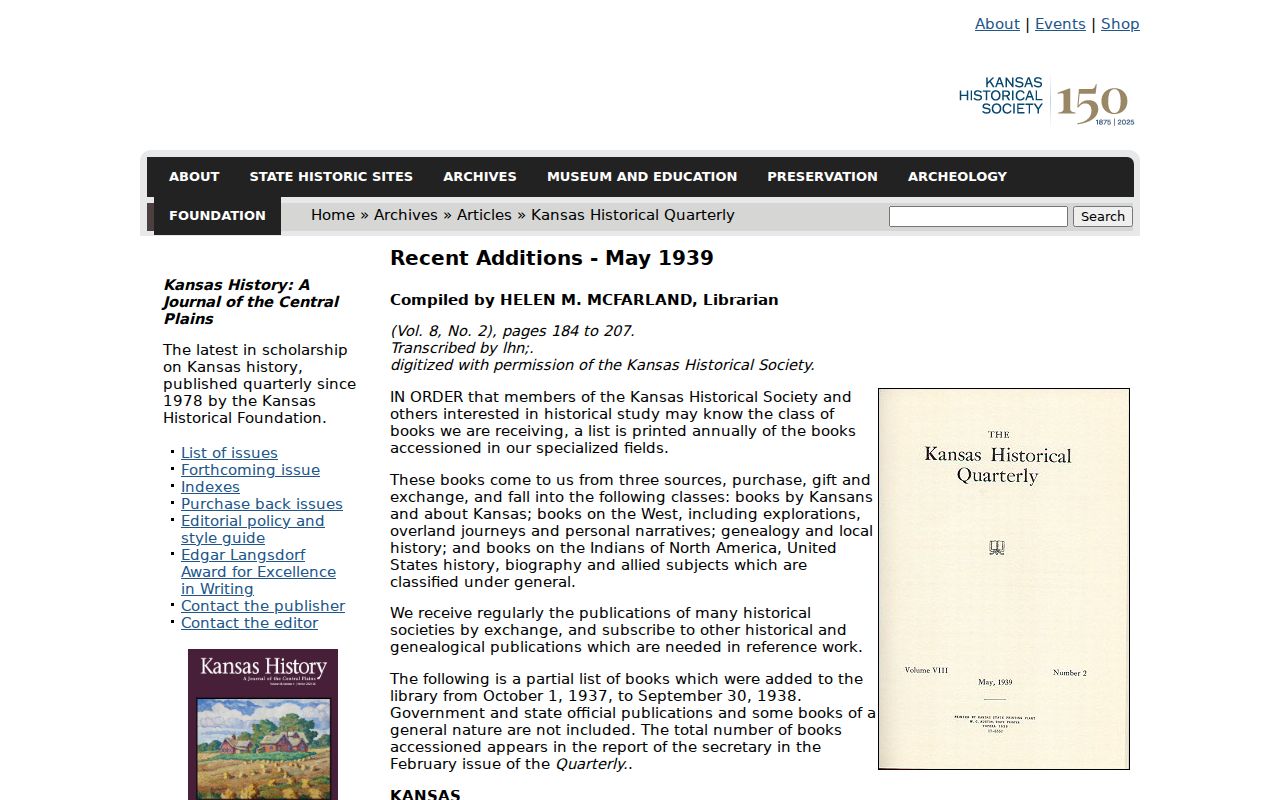
Request the exact title, year, publisher, page, and abbreviation key rather than asking staff for a broad surname search across every volume.
Polk's Emporia County Directory
R. L. Polk's 1938–39 edition is distinct because its title says that it includes Lyon County. A name in that volume may fall beyond Emporia's city limit, so the county scope must travel with the citation. This matters when the same surname appears in the city, a township, and a nearby county town.
The KSHS 1938–39 catalog record verifies the Polk title, publisher, date, and Lyon County reach.
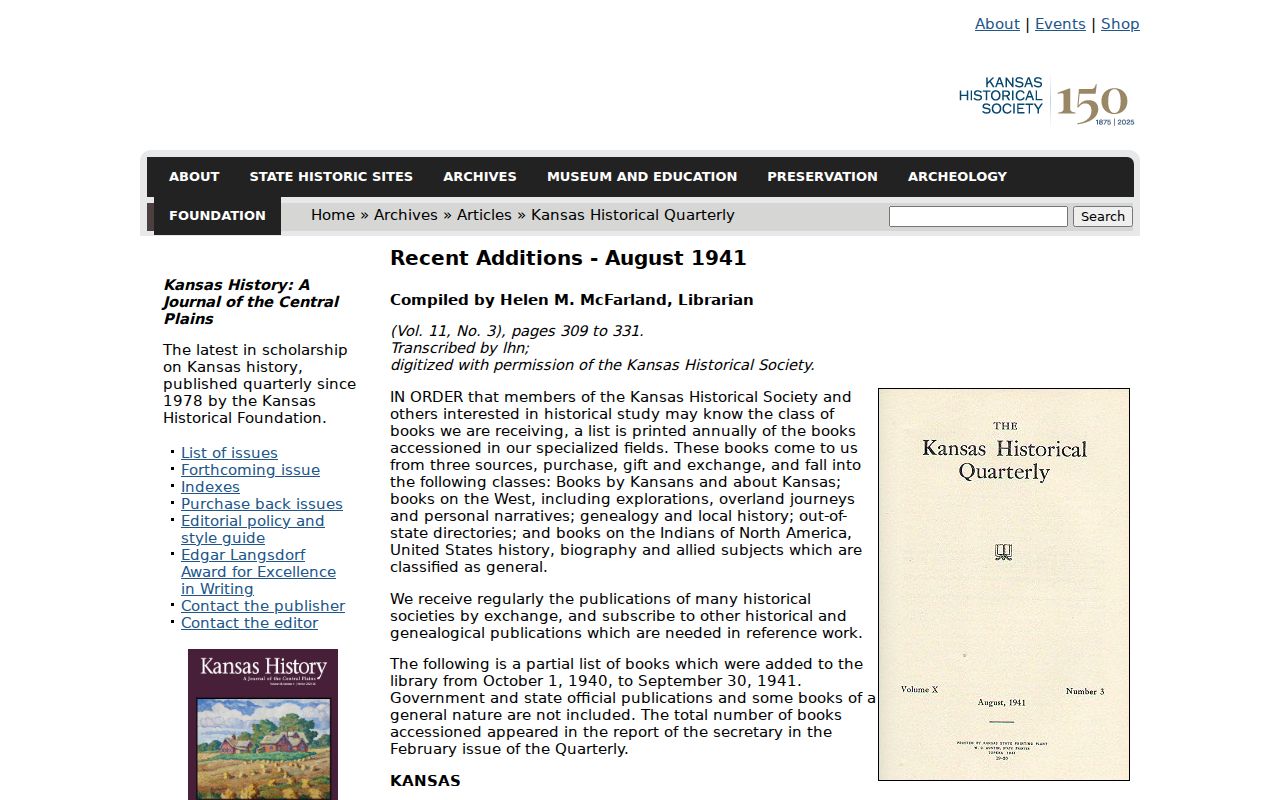
Pair a county-inclusive entry with its exact address, directory page, census place, and local map before deciding which person it names.
Search Emporia Directories at KSHS
KSHS says many directories are on microfilm and may be borrowed through interlibrary loan. Some Kansas books are digitized through its partnership with Ancestry, with Kansas-resident or research-room access. Other items may appear in Kansas Memory. Not every Emporia year is promised in each channel.
- Search Emporia as the city, then repeat with Lyon County and a short date range.
- Choose city, telephone, county, or business directory types as the question requires.
- Select print, microfilm, or digital formats, following the site's Ctrl or Cmd instruction for multiple choices.
- Record the title, year, publisher, format, and holding details for each result.
- Ask KSHS or a local library to confirm the reel and interlibrary-loan terms.
Detailed finding aids can contain books that a simple ATLAS search misses. A staff request is part of the normal access path, not a last resort.
Read an Emporia Directory Entry
No scanned resident line was opened during research, so quoted abbreviations would be unsafe. KSHS confirms that a city directory may carry a person's name, residence address, occupation, business address, and an ownership indicator. Other clues must be copied only when the page and its key actually show them.
| Printed name | Copy spelling, initials, order, and any family notation exactly. |
|---|---|
| Residence | Save the full address string, direction, suffix, room, or rural label as printed. |
| Work details | Record occupation, business affiliation, and business address only when present. |
| Owner or home mark | Photograph the edition's key before interpreting a symbol. |
| Citation | Keep directory year, publisher, page, and nearby household clues. |
- Criss-cross directory
- A section arranged by street and number so an address can lead to a printed name.
- Householder index
- An index of named household heads or principal entries, whose scope varies by edition.
- Abbreviation key
- The book's own legend for shortened words and symbols; it controls how an entry should be read.
A blank field means only that the inspected edition did not state it. It should not be filled from guesswork.
ESU's Emporia Directory Collection
The Walter M. Andersen Collection at Emporia State University includes Emporia City Directories, scrapbooks, souvenir books, rail material, and local photographs. Its scale is notable: the collection description estimates more than 12,000 prints and 20,000 negatives. That mix can connect a dated address entry to a street, building, business, campus, or rail image.
The collection page below is the source for both the directory holdings and the visual archive.

Special Collections uses a public reading room with closed stacks. Send a focused request by directory year, street, building, person, or subject, and expect staff to retrieve material.
Emporia Directories Meet Newspapers
A missing city directory year can often be bridged with a dated newspaper notice. The Emporia Public Library newspaper page routes cardholders to the Gazette from 2002 onward, digitized Gazette microfilm for 1978–2015, Kansas Digital Newspapers, the ESU Bulletin, and Fold3. Earlier KSHS and Library of Congress holdings include selected Emporia papers from the territorial and nineteenth-century years.
The library screen below shows that online, licensed, and microfilm channels must be treated as separate forms of access.

Search a full name with its directory address, trade, spouse, organization, or legal notice. No standalone official Emporia obituary index was found, so issue-by-issue searching and staff help remain important.
Map Emporia Directory Addresses
KSHS lists Emporia Sanborn sheets for 1884, 1888, 1893, 1899, 1905, 1911, 1923, 1929, 1929–46, and 1962. They can show a building footprint, construction detail, street label, and use near a directory year. They do not prove who occupied the site.
For downtown work, start near the original 6th and Commercial center. The historic district covers about 18 blocks and 169 buildings, offering a dense set of address, plat, building, and nomination clues. Pair the nearest map with a directory page and a deed. If labels differ, retain both versions and ask GIS or archive staff to reconcile them.
Note: No official source verified a citywide Emporia street-renumbering year, so do not invent one to explain an address change.
Emporia Directory Help in Person
Local access can solve what the catalog cannot. Emporia Public Library at 110 E 6th Avenue has public computers, a legal-research workstation, a microfilm workstation, printing, scanning, and staff help. Its published hours are Monday through Friday from 9 to 6 and Saturday and Sunday from 1 to 5. Call 620-340-6462 or the collections line at 620-340-6469 before a visit. A Book-a-Librarian request can frame a hard search, though staff do not fill forms or give legal advice.
The Lyon County History Center at 711 Commercial Street keeps a research library available by appointment. It is open Tuesday through Saturday from 10 to 4, with research help at 620-340-6320. Ask about family papers, photographs, cemetery or burial references, local firms, and historic-address files. No complete online name index or fee list is promised, so provide a person, date span, street, and record type.
KSHS remains the main route for statewide directory finding aids, microfilm, interlibrary loan, Sanborn maps, and archive pulls. ESU Special Collections is a fourth channel for university and regional material. Together, these desks make a failed web search the start of a more exact request rather than the end of the trail.
Trace Family in Emporia Directories
A city directory is a dated checkpoint, not a census and not current proof. Begin with the clearest known name and address. Keep initials, family notation, occupation, and business address together so a common surname does not pull the search onto another person. This is especially important in Emporia, where KSHS history notes common Welsh surnames such as Jones and Thomas.
- Find the first secure entry and copy the whole line, year, publisher, page, and key.
- Check one earlier and one later available edition. Note changes, but do not guess why a name disappears.
- Use a reverse street section only if staff or the volume confirms that the edition has one.
- Pair directory snapshots with the 1880 through 1950 released federal censuses under the 72-year rule.
- Test the identity in newspapers, probate, deeds, cemetery sources, yearbooks, or local archive files.
A disappearance may mean a move, death, omission, change of name, county placement, or a missing edition. The Gazette, census, and deed trail help distinguish those paths. For modern address-keyed work, use the Emporia street directory rather than treating an old volume as present residence proof.